Meet the fork-leaved sundew, Drosera binata. Its branching leaves give this Australian and New Zealand native a distinctive look among carnivorous plants. It is also a rewarding species to grow and propagate.
How sundews catch their prey
Most sundews (Drosera) catch insects with tiny, gland-tipped tentacles covered in glistening sticky droplets. Those beads are not ordinary dew: they are mucilage that holds small insects in place. Nearby tentacles may slowly bend toward the prey, while digestive enzymes help the plant absorb nutrients.
The fork-leaved sundew, Drosera binata, is especially recognizable because its leaves divide into narrow, branching arms. It is native to Australia and New Zealand, where it grows in wet, nutrient-poor habitats. Like many sundews, it appreciates strong light and low-mineral water.
Drosera binata photo gallery
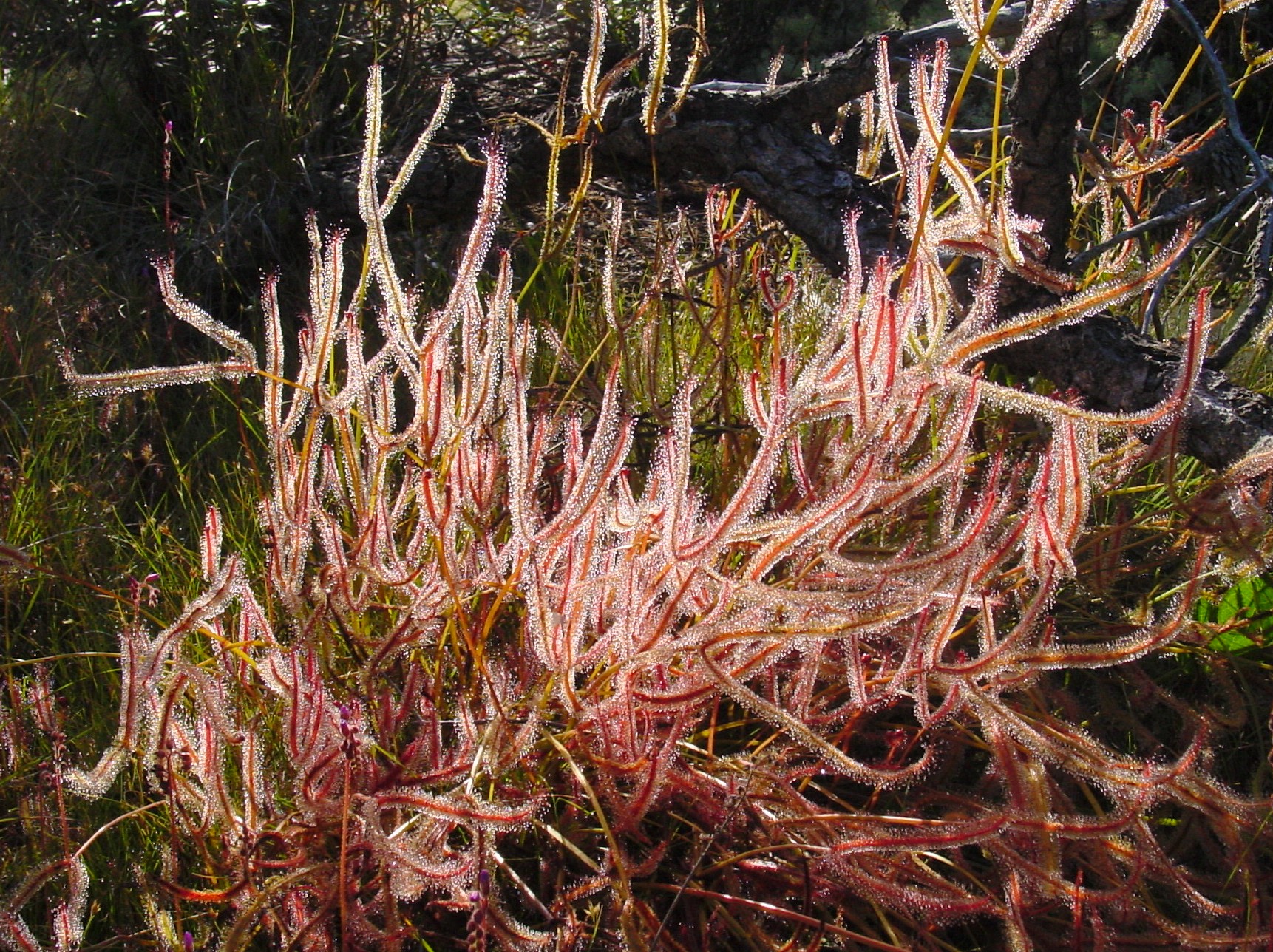
Fork-leaved sundew
Photo: Noah Elhardt. Used under Creative Commons Attribution-ShareAlike 2.5.

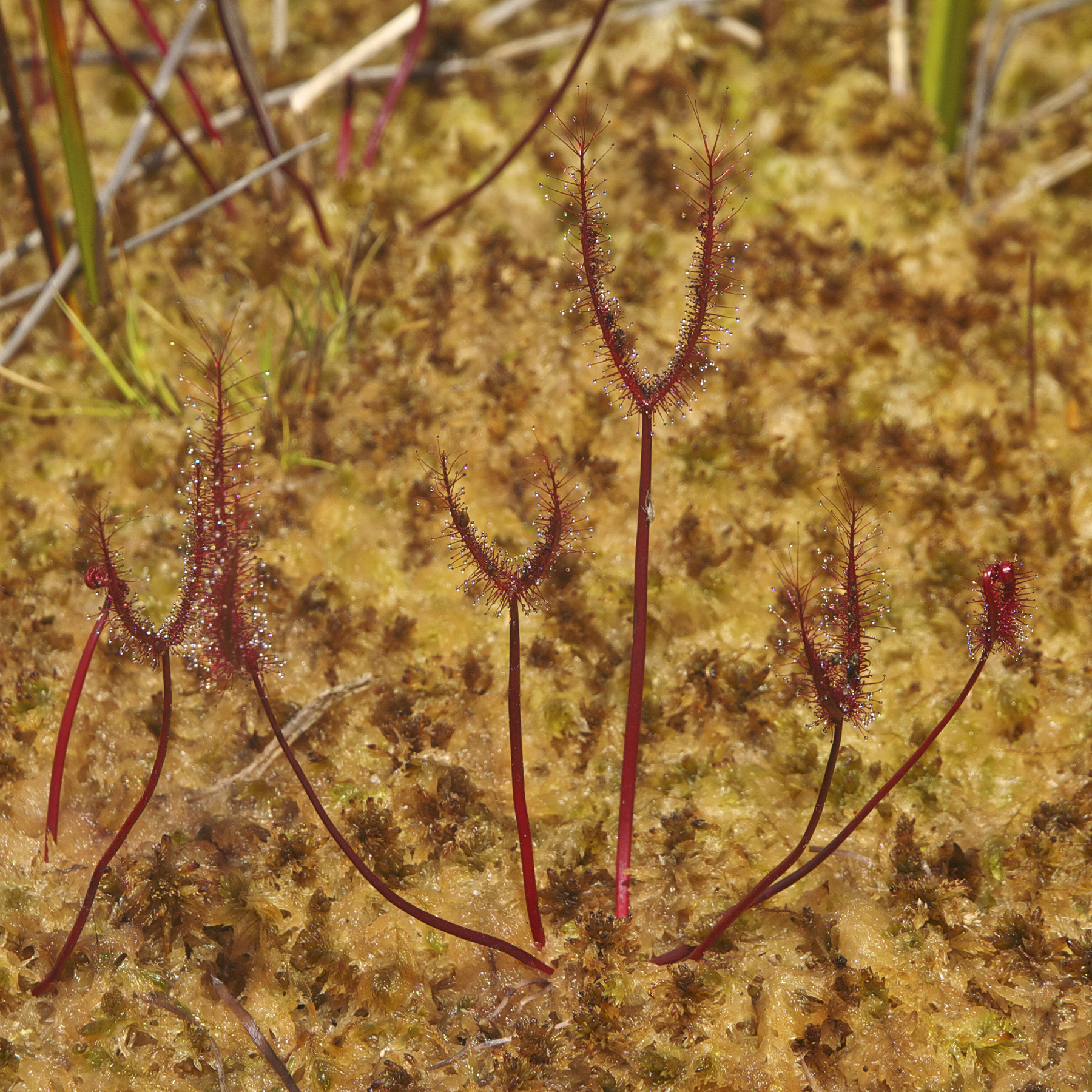
Drosera binata in habitat
Photo: Jörg Hempel. Used under Creative Commons Attribution-ShareAlike 3.0 Germany.

These are reference photographs of the species, not pictures of individual plants currently offered for sale. Plants vary in size and appearance depending on age and growing conditions.
Visit the BiteBloom shop to see our current carnivorous plant selection.