Butterworts (Pinguicula) use sticky, glandular leaves to capture small insects. Their rosettes and flowers vary widely among species, making this a fascinating group to explore.
How butterworts catch insects
Butterworts (Pinguicula) catch tiny insects on leaves coated with sticky droplets from microscopic glands. Other glands on the leaf release digestive enzymes, allowing the plant to absorb nutrients from its catch. Their simple rosettes can look delicate, but those leaves are highly specialized insect traps.
The genus includes plants from very different climates, so not all butterworts grow in the same way. Some Mexican species, including Pinguicula moranensis, can change with the seasons: producing larger, sticky carnivorous leaves during active growth and a tighter rosette of thicker leaves during a drier resting period. Flowers often rise well above the leaves on slender stalks.
Pinguicula photo gallery
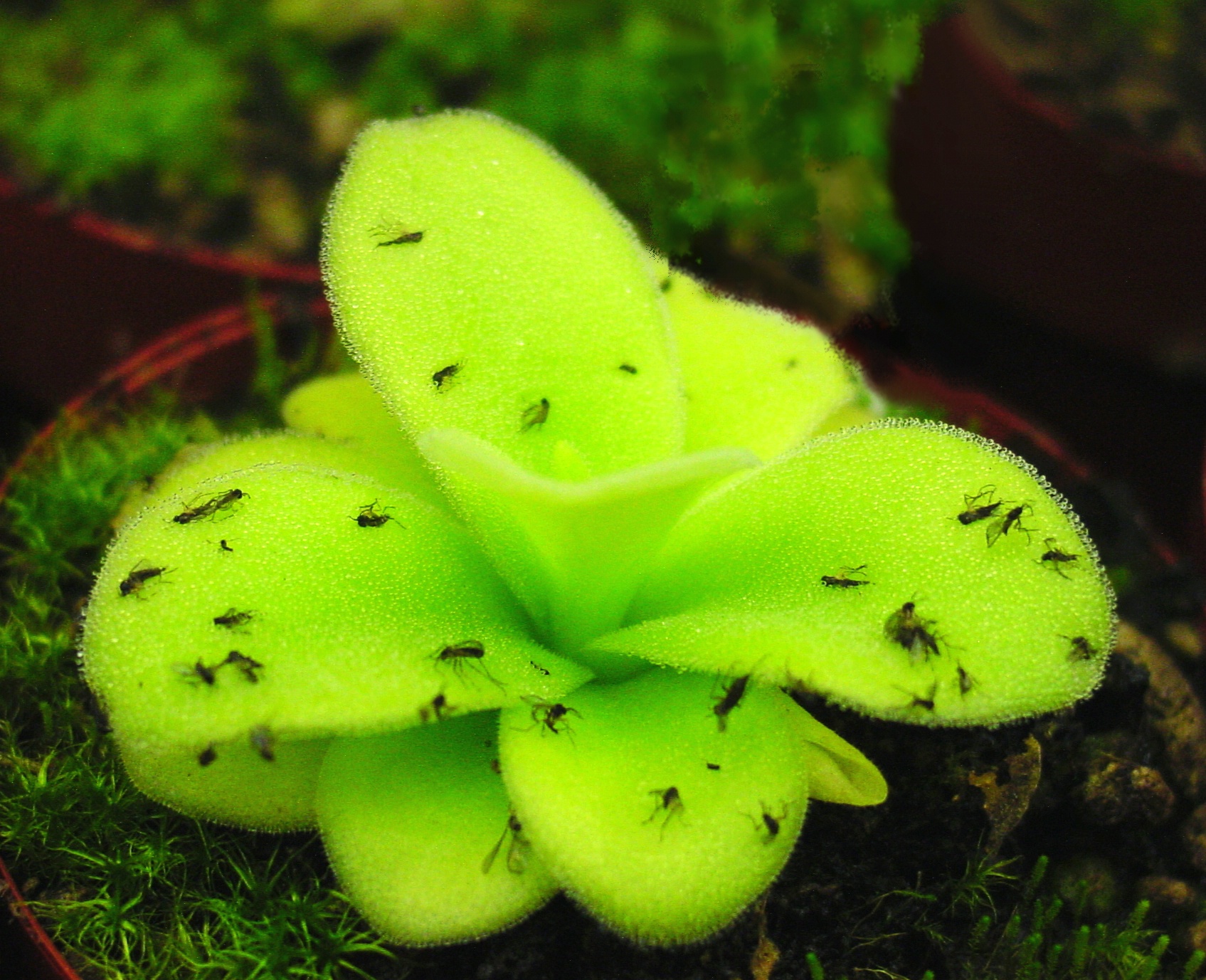
Giant butterwort (Pinguicula gigantea)
Photo: Noah Elhardt. Used under Creative Commons Attribution-ShareAlike 3.0 Unported.

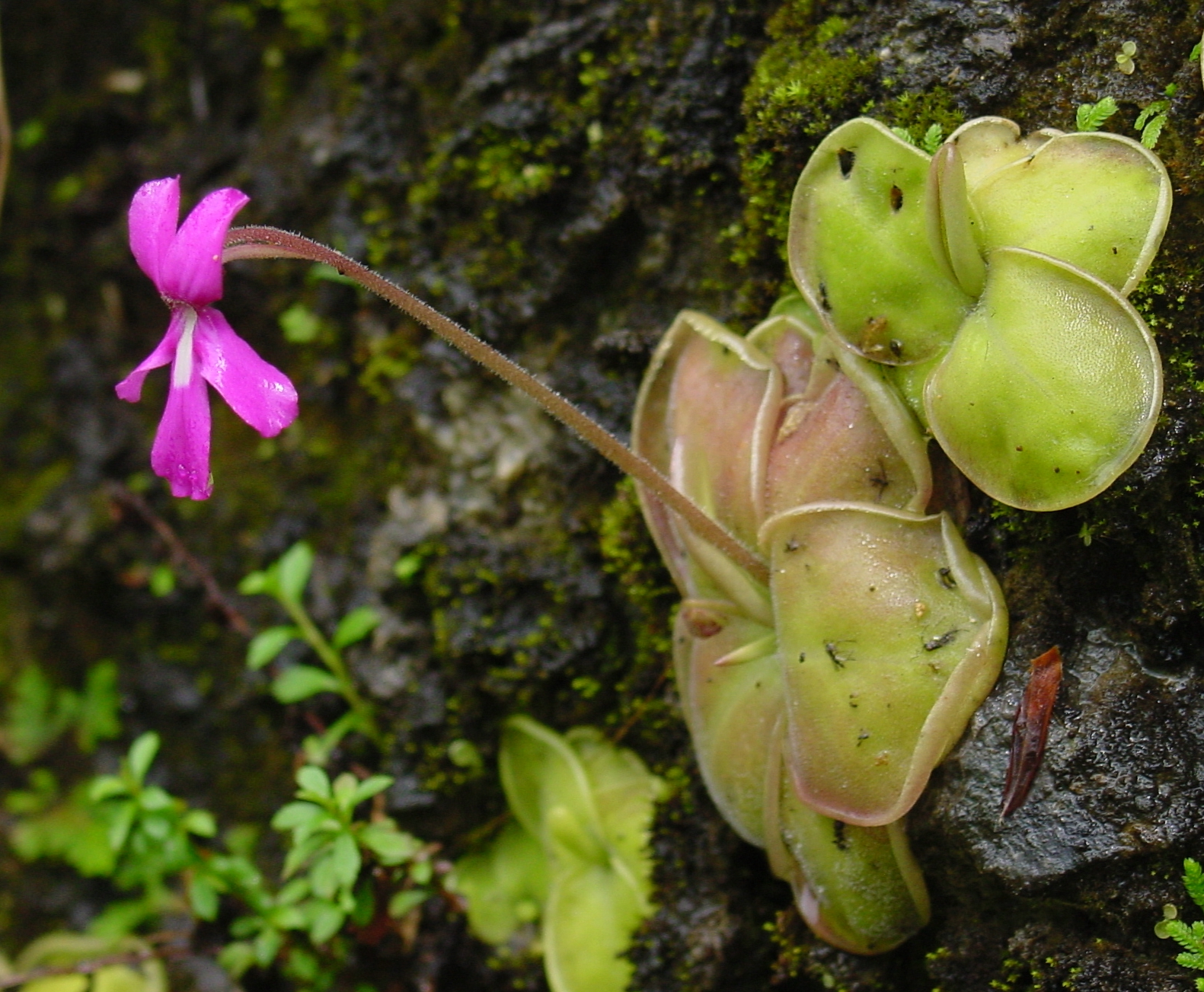
Butterwort (Pinguicula moranensis)
Photo: Noah Elhardt. Used under Creative Commons Attribution-ShareAlike 2.5 Generic.

These are reference photographs of the species, not pictures of individual plants currently offered for sale. Plants vary in size and appearance depending on age and growing conditions.